

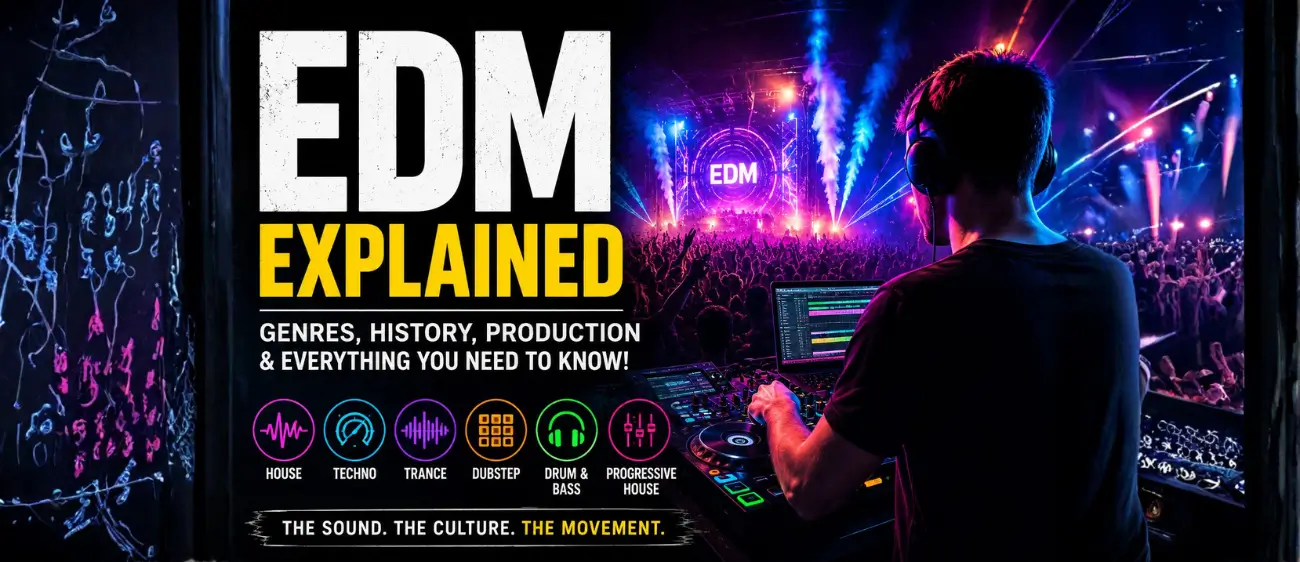
What Is EDM? A Complete Beginner’s Guide to Electronic Dance Music
by August 4, 2026Electronic Dance Music, commonly known as EDM, is one of the world’s most popular music genres. From massive festivals like Tomorrowland and Ultra Music Festival to clubs, radio, streaming platforms, and video games, EDM has become a global phenomenon that connects millions of people through rhythm, energy, and emotion.
Whether you’re new to electronic music or looking to understand the different styles within EDM, this guide covers everything you need to know.
What Does EDM Stand For?
EDM stands for Electronic Dance Music, a broad category of music primarily created using electronic instruments, synthesizers, drum machines, samplers, and computer software.
Unlike traditional bands that rely on guitars, drums, and pianos, EDM producers build tracks digitally using music production software such as FL Studio, Ableton Live, or Logic Pro.
The genre is designed to move people on the dance floor while also providing emotional and immersive listening experiences.
The History of EDM
Electronic music began evolving during the 1970s and 1980s with the rise of disco, synth-pop, house, and techno.
Some major milestones include:
- 1970s: Electronic instruments became more accessible.
- 1980s: House music emerged in Chicago, while techno developed in Detroit.
- 1990s: Trance, drum & bass, and progressive styles gained worldwide popularity.
- 2000s: EDM entered the mainstream with global festivals and superstar DJs.
- 2010s to Today: Streaming platforms and social media helped electronic music reach billions of listeners worldwide.
Today, EDM continues to evolve with countless subgenres and innovative production techniques.
What Makes EDM Different?
Unlike many traditional genres, EDM is built around electronic production techniques.
Common elements include:
- Powerful kick drums
- Deep basslines
- Synthesizers
- Electronic percussion
- Vocal samples
- Build-ups
- Drops
- Atmospheric effects
- Automation and sound design
The combination of these elements creates energetic and emotionally engaging music suitable for festivals, clubs, workouts, gaming, and everyday listening.
Popular EDM Genres
House Music
House music is one of the oldest and most influential electronic genres.
Characteristics:
- 120–128 BPM
- Four-on-the-floor kick pattern
- Groovy basslines
- Smooth vocals
- Dance-friendly rhythm
Perfect for clubs and parties.
Techno
Techno focuses on hypnotic rhythms, driving percussion, and minimal arrangements.
Characteristics:
- 125–140 BPM
- Deep bass
- Repetitive grooves
- Atmospheric textures
- Underground club sound
Popular among underground electronic music fans.
Melodic Techno
Melodic Techno combines emotional melodies with driving techno rhythms.
Features include:
- Cinematic synths
- Emotional chord progressions
- Powerful basslines
- Long build-ups
- Atmospheric soundscapes
Artists in this style often blend storytelling with dance music.
Progressive House
Progressive House emphasizes melody and gradual energy changes.
Characteristics:
- Emotional breakdowns
- Layered synths
- Smooth transitions
- Uplifting drops
- Festival-ready atmosphere
It remains a favorite for both clubs and large-scale events.
Future Bass
Future Bass is known for its rich chords, bright synths, and energetic drops.
Common features:
- Chopped vocal samples
- Wide stereo sounds
- Heavy sidechain compression
- Emotional melodies
Dubstep
Dubstep delivers aggressive bass and dramatic drops.
Key elements:
- Wobble bass
- Heavy sound design
- Half-time drum patterns
- Intense energy
Trance
Trance focuses on emotional progression and uplifting melodies.
Characteristics:
- 128–140 BPM
- Long build-ups
- Euphoric leads
- Hypnotic rhythms
Drum & Bass
One of the fastest electronic genres.
Characteristics:
- 160–180 BPM
- Fast breakbeats
- Powerful bass
- High energy
Why EDM Is So Popular
Several factors have contributed to EDM’s global success:
Universal Appeal
EDM often relies less on lyrics and more on rhythm and emotion, making it enjoyable across different languages and cultures.
Festival Culture
Large-scale events featuring world-class production, lighting, and visuals have introduced millions of fans to electronic music.
Endless Creativity
Because producers create music digitally, there are virtually no limits to experimentation with sounds and styles.
Accessibility
Modern software allows almost anyone with a computer to begin producing music from home.
How EDM Is Made
Producing an EDM track typically involves these stages:
1. Idea Creation
Start with a melody, chord progression, bassline, or drum groove.
2. Sound Design
Create or choose sounds using synthesizers and sample libraries.
3. Arrangement
Organize the track into sections such as:
- Intro
- Build-up
- Drop
- Breakdown
- Second Build
- Final Drop
- Outro
4. Mixing
Balance levels, apply EQ, compression, reverb, delay, and stereo processing.
5. Mastering
Prepare the final version for streaming platforms, clubs, radio, and digital stores.
Essential Tools for EDM Producers
Most producers use a Digital Audio Workstation (DAW) such as:
- FL Studio
- Ableton Live
- Logic Pro
- Cubase
- Studio One
Popular plugins include:
- Serum
- Vital
- Sylenth1
- FabFilter Pro-Q
- FabFilter Pro-L
- Valhalla VintageVerb
- ShaperBox
- Ozone
Tips for New EDM Producers
If you’re starting your production journey:
- Learn your DAW thoroughly before buying new plugins.
- Finish tracks instead of endlessly starting new ones.
- Use reference tracks to improve your mixing.
- Practice consistently.
- Build your own sound instead of copying other artists.
- Learn basic music theory.
- Organize your sample library.
- Take breaks to avoid ear fatigue.
Improvement comes from consistency, not shortcuts.
The Future of EDM
Electronic Dance Music continues to evolve through new production techniques, emerging subgenres, and advances in technology. Artificial intelligence, immersive live visuals, spatial audio, and innovative sound design are opening up fresh creative possibilities for producers and performers alike.
As technology becomes more accessible, the next generation of EDM artists will have even more tools to push the boundaries of electronic music.
Final Thoughts
EDM is far more than just music for clubs or festivals. It is a diverse and constantly evolving genre that blends technology, creativity, and emotion into unforgettable listening experiences.
Whether you enjoy the uplifting melodies of Progressive House, the hypnotic grooves of Techno, the emotional depth of Melodic Techno, or the energy of Drum & Bass, EDM offers something for every listener.
For aspiring producers, there’s never been a better time to start. With modern software, online learning resources, and a global community of creators, anyone with passion and dedication can begin making electronic music and develop a unique artistic voice.

Leave a comment